Emma Pinchbeck: The Climate and Energy Leader Driving Britain’s Net Zero Transformation

Emma Pinchbeck has emerged as one of the most influential figures in Britain’s climate and energy sector. Over the past decade, she has become widely recognized for her expertise in renewable energy, decarbonisation, climate policy, and sustainable economic transition. As debates around net zero emissions, energy security, and climate action continue dominating political and economic discussions, Pinchbeck has established herself as a respected voice capable of explaining complex environmental challenges in practical and accessible ways.
Her growing influence reflects the increasing importance of climate leadership within modern policymaking and industry planning. Emma Pinchbeck’s work has connected government institutions, renewable energy companies, environmental organizations, and the wider public during a period of rapid transformation in the UK energy sector. Searches for terms such as “Emma Pinchbeck biography,” “Emma Pinchbeck net zero,” “Emma Pinchbeck Climate Change Committee,” and “Emma Pinchbeck Energy UK” have increased significantly as more people seek information about the woman helping shape Britain’s low-carbon future.
Emma Pinchbeck’s Early Life and Childhood Influences
Emma Pinchbeck grew up in Gloucestershire, England, where her connection to nature and the countryside played an important role in shaping her environmental awareness. She has spoken publicly about how growing up in rural surroundings influenced her understanding of landscapes, farming communities, and the importance of environmental protection. Her family reportedly had deep roots in the Gloucestershire area, giving her a strong appreciation for local communities and the natural world from an early age.
Like many future climate leaders, Pinchbeck did not initially begin her career with the intention of working in energy policy or environmental advocacy. During her younger years, climate change was not yet discussed with the same urgency it receives today. However, broader global conversations around sustainability, renewable energy, and environmental responsibility gradually influenced her perspective and career direction.
Her educational path also reflected a broad intellectual background rather than narrow technical specialization. Pinchbeck attended Stroud High School before later studying Classics at the University of Oxford. Although Classics may seem unrelated to climate leadership, the degree helped develop analytical thinking, communication abilities, and problem-solving skills that later became highly valuable in her professional life. Her career journey demonstrates how leadership in modern climate policy often requires interdisciplinary thinking rather than expertise in a single scientific field alone.
Education and the Beginning of Her Professional Career
After completing her education, Emma Pinchbeck initially entered the financial and corporate world through graduate employment opportunities. Early in her career, she worked in sectors connected to consultancy and business services, experiences that later helped her understand how industries respond to economic and regulatory pressures. This commercial awareness eventually became one of her major strengths as a climate policy leader because she understood how businesses evaluate risk, investment, and operational change.
Over time, Pinchbeck became increasingly interested in sustainability and environmental issues. Growing public concern about global warming, renewable energy, and carbon emissions encouraged her to transition toward work more closely connected to climate action. Like many professionals who entered the climate sector during the early 2000s and 2010s, she recognized that environmental challenges would become central economic and political issues in the future.
Her move into sustainability-focused work marked the beginning of a career that would eventually place her among Britain’s most influential climate policy figures. Instead of focusing solely on activism, Pinchbeck developed an approach centered on practical policy, collaboration, and long-term economic transition. This balance between environmental ambition and commercial realism later became a defining feature of her leadership style.
Emma Pinchbeck’s Rise in the Climate and Sustainability Sector
Emma Pinchbeck’s professional reputation grew significantly through her work in climate advocacy and renewable energy policy. One of her major early leadership roles came at WWF-UK, where she served as Head of Climate and Energy. During this period, she worked on issues related to decarbonisation, sustainable infrastructure, carbon reduction strategies, and renewable energy expansion.
At WWF-UK, Pinchbeck gained valuable experience communicating environmental challenges to policymakers, businesses, and the wider public. She became increasingly involved in debates surrounding climate legislation, energy transition planning, and sustainable economic development. Her ability to explain complicated energy systems in straightforward language quickly distinguished her from many policy specialists who struggled to communicate effectively outside technical circles.
Her growing expertise eventually led to a major position within RenewableUK, one of Britain’s leading renewable energy trade associations. Serving as Deputy Chief Executive, Pinchbeck became heavily involved in promoting offshore wind development, clean electricity generation, and renewable infrastructure investment. This period coincided with major expansion in Britain’s renewable energy industry, especially offshore wind projects that helped transform the country into a global clean energy leader.
Leadership at Energy UK and Public Recognition
In 2020, Emma Pinchbeck became Chief Executive of Energy UK, a major industry body representing companies involved in electricity generation, renewable energy, heating, transport, and energy supply. Her appointment placed her at the center of national discussions about climate policy, energy affordability, infrastructure investment, and decarbonisation strategy.
Her leadership at Energy UK came during an especially difficult period for the energy sector. The COVID-19 pandemic disrupted economies and energy markets globally, while later geopolitical instability caused major increases in energy prices across Europe. Consumers faced rising household bills, governments struggled with energy security concerns, and businesses navigated uncertain market conditions. During this turbulent period, Pinchbeck became one of the most visible public figures explaining energy market developments and long-term transition strategies.
Television appearances, radio interviews, industry conferences, and public debates significantly increased her national profile. Unlike many technical experts who communicate in overly complicated terms, Pinchbeck developed a reputation for clear and relatable communication. She frequently discussed topics such as renewable electricity, heat pumps, electric vehicles, energy efficiency, and net zero policy in ways ordinary households could understand. This communication style helped establish her as one of Britain’s most trusted climate and energy voices.
Emma Pinchbeck’s Role in the Net Zero Debate
One of the reasons Emma Pinchbeck became so influential is her role in shaping the national conversation around net zero emissions. The UK government legally committed to achieving net zero greenhouse gas emissions by 2050, meaning the country must dramatically reduce carbon output across transport, heating, electricity, industry, and agriculture. Pinchbeck emerged as one of the strongest advocates for practical and economically realistic pathways toward that goal.
Rather than presenting climate action purely as sacrifice or restriction, she often frames the energy transition as an opportunity for modernization, innovation, and economic growth. She argues that renewable energy technologies, clean transportation systems, and low-carbon infrastructure investments can improve both environmental sustainability and national economic competitiveness. This optimistic and solution-focused approach has resonated with businesses and policymakers seeking balanced climate strategies.
Pinchbeck has also consistently emphasized the importance of fairness within the net zero transition. She frequently discusses how workers, industrial communities, and lower-income households must not be left behind during climate-related economic changes. Her public comments often highlight the need for retraining programs, affordable clean technology, and long-term infrastructure planning to ensure climate policies remain socially and politically sustainable.
Appointment to the Climate Change Committee
A major turning point in Emma Pinchbeck’s career came when she was appointed Chief Executive of the Climate Change Committee in 2024. The Climate Change Committee, commonly known as the CCC, serves as the UK government’s independent adviser on emissions targets, carbon budgets, and long-term climate policy. The organization plays a critical role in monitoring the country’s progress toward net zero goals.
Her appointment attracted significant attention because the role carries enormous influence over Britain’s future climate direction. Pinchbeck replaced Chris Stark during a period when pressure on governments to accelerate climate action continued increasing internationally. Supporters viewed her industry background as a major advantage because she understood not only environmental science but also the operational realities facing businesses and energy providers.
The appointment also reflected broader changes within climate leadership itself. Modern climate policy increasingly requires leaders who can bridge political divisions, communicate with industries, and balance environmental urgency with economic practicality. Pinchbeck’s career experience across advocacy organizations, trade associations, and public communication positioned her as a figure capable of managing these competing pressures effectively.
Emma Pinchbeck’s Views on Renewable Energy and Energy Security
Emma Pinchbeck has consistently argued that renewable energy plays a crucial role not only in reducing emissions but also in improving long-term energy security. In the aftermath of global energy market instability and rising gas prices, she frequently explained how greater investment in domestic renewable electricity could help reduce dependence on volatile international fossil fuel markets.
Her public comments often focus on offshore wind, solar power, battery storage, electricity grid modernization, and low-carbon heating systems. She believes the UK has strong potential to become a global leader in renewable energy innovation because of its natural wind resources, engineering expertise, and existing energy infrastructure. Offshore wind development, in particular, has become one of the defining success stories of Britain’s energy transition strategy.
At the same time, Pinchbeck acknowledges the practical challenges associated with rapid infrastructure development. Large-scale renewable projects sometimes face political opposition, planning delays, or concerns from local communities. Rather than dismissing these concerns, she generally advocates transparent communication and long-term planning to balance environmental priorities with community interests and economic realities.
Public Communication and Media Influence
Emma Pinchbeck’s influence extends beyond policy reports and industry meetings because she has become an effective public communicator on climate and energy issues. Climate discussions often involve highly technical concepts that many people find confusing or inaccessible. Pinchbeck’s ability to simplify complex topics without losing accuracy has made her one of the UK’s most recognizable climate commentators.
She frequently appears on television news programs, political panels, business conferences, and podcasts discussing issues such as energy bills, electric transport, renewable electricity, and climate targets. Her calm and analytical communication style helps audiences better understand complicated issues affecting both households and national economies.
Pinchbeck also actively addresses misinformation surrounding climate change and renewable energy. In public debates, she often explains the economic realities behind energy pricing, infrastructure investment, and carbon reduction strategies. Her willingness to engage directly with critics and skeptics has strengthened her reputation as a practical and evidence-based leader rather than a purely ideological campaigner.
The media visibility she developed during the UK energy crisis further expanded her influence. At a time when millions of households faced rising energy costs, audiences increasingly looked for trusted experts capable of explaining what was happening and how long-term solutions might emerge. Pinchbeck’s public profile grew significantly during this period because of her ability to communicate clearly during uncertainty.
Leadership Style and Influence Within the Energy Sector
Within Britain’s climate and energy industries, Emma Pinchbeck is often described as collaborative, pragmatic, and solutions-oriented. Unlike some environmental advocates who focus primarily on criticism, she typically emphasizes partnerships between government, industry, and communities. Her leadership style reflects the reality that large-scale decarbonisation requires cooperation across multiple sectors rather than isolated activism alone.
Industry leaders frequently praise her ability to understand both commercial pressures and environmental priorities simultaneously. She recognizes that businesses need predictable regulation, investment certainty, and realistic transition timelines while also supporting ambitious climate goals. This balance has allowed her to maintain credibility across environmental organizations, political institutions, and corporate sectors.
Her leadership also represents a generational shift within climate policy. Younger climate leaders increasingly focus on integrating sustainability directly into economic planning instead of treating environmental policy as separate from business development. Pinchbeck’s career reflects this approach by linking climate action to innovation, industrial modernization, employment growth, and long-term national competitiveness.
Challenges Facing Emma Pinchbeck and UK Climate Policy
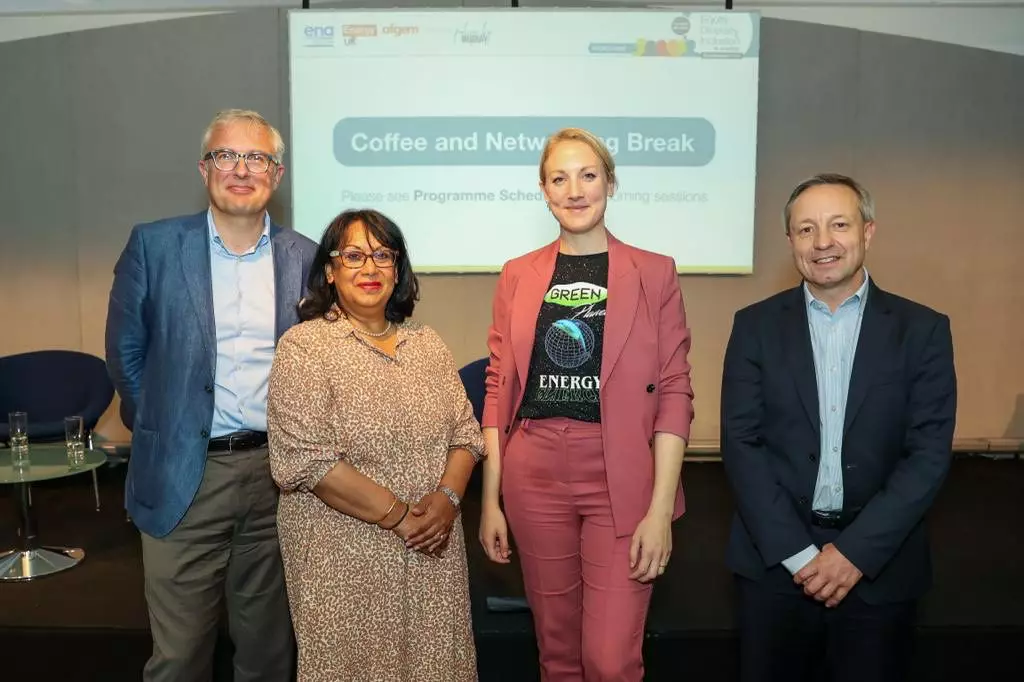
Despite her growing influence and reputation, Emma Pinchbeck faces significant challenges as Britain continues pursuing net zero goals. Achieving major emissions reductions across transport, heating, industry, and agriculture requires enormous financial investment and long-term political commitment. Public debates surrounding energy costs, infrastructure projects, and climate regulations remain highly sensitive politically.
One of the biggest difficulties involves balancing environmental urgency with affordability concerns. Many households worry about rising costs associated with clean heating systems, electric vehicles, or energy efficiency improvements. Pinchbeck often stresses that governments must design climate policies carefully to maintain public trust and avoid deepening social inequalities.
Political divisions surrounding climate policy also create ongoing challenges. Environmental campaigners sometimes demand faster action than governments or industries are prepared to deliver, while critics of net zero strategies argue that transition costs are excessive or economically risky. As a prominent climate leader, Pinchbeck must navigate these competing pressures while maintaining evidence-based policy recommendations and public credibility.
Emma Pinchbeck’s Lasting Impact on Britain’s Climate Future
Emma Pinchbeck’s career reflects the growing importance of climate leadership within modern society. As countries worldwide confront rising temperatures, energy transformation, and economic adaptation challenges, figures like Pinchbeck play an increasingly important role in shaping public understanding and political decision-making.
Her influence extends far beyond technical policy discussions because she has helped make climate and energy issues more understandable to wider audiences. Through her work at WWF-UK, RenewableUK, Energy UK, and the Climate Change Committee, she has consistently focused on connecting environmental responsibility with practical economic planning.
As Britain continues transitioning toward a low-carbon economy, Emma Pinchbeck will likely remain one of the country’s most important voices on renewable energy, sustainability, and climate policy. Her combination of communication skills, policy expertise, and pragmatic leadership has positioned her as a defining figure within the UK’s energy transition era. Whether discussing offshore wind expansion, clean transportation systems, or national carbon targets, she continues shaping conversations that will influence Britain’s environmental and economic future for decades to come.



Leave a Comment